Interferential Therapy
Both TENS (Transcutaneous Electrical Nerve Stimulation) and Interferential Current (IFC/IFT) are non-invasive electrotherapy treatments used for pain relief, but they differ in how they deliver electrical signals and how deep they penetrate the body.
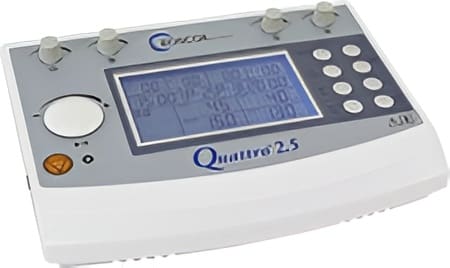
Core Differences
Underlying Mechanism & Frequency
- TENS: Uses low-frequency (typically 1 to 150 Hz) rectangular pulses delivered directly through the skin to stimulate sensory nerves, engage the Gate-Control Theory, and trigger endorphin release.
- Interferential Current (IFC):Crosses two separate medium-frequency currents (e.g., 4,000 Hz and 4,100 Hz) inside the tissues. They intersect to create a low-frequency "beat" frequency deep inside the body.
Depth of Penetration & Skin Resistance
- TENS: Stays closer to the surface and immediate nerve pathways. Low-frequency waves encounter more skin resistance.
- Interferential Current (IFC): Medium-frequency currents encounter less skin resistance, allowing deeper penetration into joints, thick muscles, and large tissue volumes with greater comfort.
Additional Physiological Effects
- TENS: Primarily masks or blocks surface-acting pain signals ("mute button").
- Interferential Current (IFC): Reaches deeper somatic pain, reduces deep muscle spasms and tension, and promotes microvascular vasodilation to help decrease swelling and edema.
Portability & Setting
- TENS: Small, battery-operated, portable devices designed for independent, self-administered use at home.
- Interferential Current (IFC): Typically larger equipment administered in clinical, physical therapy, or chiropractic settings.
Interferential current (IFC) therapy works by crossing two medium-frequency electrical currents inside the body to generate a deep-penetrating, pain-relieving low-frequency stimulation.
By using higher frequencies to bypass the skin's natural electrical resistance, it delivers therapy deeper into tissues than standard surface-level electrical treatments (like TENS) with significantly less discomfort.
Here is a step-by-step breakdown of the science and the process behind how it works:
1. Overcoming Skin Resistance
The human skin naturally acts as a barrier to low-frequency electrical currents, which can cause a stinging or burning sensation on the surface. IFC therapy solves this by using two channels that output medium-frequency carrier currents (usually around 4,000 to 5,000 Hz). At this high frequency, the electrical current passes through the skin seamlessly with minimal resistance and zero discomfort.
2. The Principle of Interference
A therapist places four electrode pads on your skin in a crisscross pattern surrounding the painful area:
- Channel 1 delivers a constant frequency (e.g., 4,000 Hz).
- Channel 2 delivers a slightly different variable frequency (e.g., 4,100 Hz).
Where these two currents intersect deep inside the tissue, they "interfere" with one another. The frequencies cancel each other out in waves, creating a new, third current known as the "beat frequency". In this example, the resulting therapeutic deep-tissue current has a low frequency of exactly 100 Hz (4,100 minus 4,000).
3. Cellular and Neurological Impact
Once the low-frequency beat current is generated deep within the target muscles, nerves, or joints, it triggers three primary physiological responses:
- The Gate Control Theory of Pain: The electrical stimulation crowds the nerve pathways, effectively "blocking" pain signals from traveling up the spinal cord to the brain.
- Endorphin Release: The deep tingling sensation prompts the body to produce and release endorphins, which act as natural, systemic painkillers.
- Vasodilation and Edema Reduction: The gentle deep-tissue stimulation causes blood vessels to widen, which increases local blood circulation, accelerates the removal of waste fluids, and decreases swelling and inflammation.
What a Session Feels Like
During a typical 15-to-20-minute session, you will not feel any painful muscle zaps or burning on your skin. Instead, you will experience a mild, soothing tingling or buzzing sensation underneath the pads as the current targets deep-seated chronic pain or muscle spasms.
Yes, a member of the public can purchase an interferential current (IFC) machine for home use, but federal law and FDA regulations classify them as Class II medical devices that require a prescription from a licensed healthcare provider (such as an MD, DO, DC, PT, PA, or NP) unless you are a licensed practitioner or reseller. [1]
Key Details for Purchasing an IFC Machine:
- Prescription Requirement: Online medical equipment suppliers and distributors (like TENSPros.com or ElectroMedical.com) will ask you to submit a prescription via fax or email before fulfilling an order for a dedicated or combo IFC unit. [1, 2]
- IFC vs. TENS:Unlike basic Transcutaneous Electrical Nerve Stimulation (TENS) units—many of which can be bought over-the-counter at pharmacies without a prescription—interferential therapy units use intersecting medium-frequency currents (typically 4000 Hz) designed to penetrate deeper into joint spaces and muscle tissue. Because of this deeper penetration, they are regulated more strictly. [1, 2]
- Combo Units:Many portable home units are multi-modal devices that combine IFC with TENS, EMS (Electrical Muscle Stimulation), or NMES (Neuromuscular Electrical Stimulation), all of which still generally require a clinician's authorization for the IFC/EMS capabilities. [1, 2]
- Insurance Coverage: Insurance coverage varies widely. Many private insurers or programs like Medicare may not cover or reimburse IFC/TENS equipment for unsupervised home use unless specific medical necessity criteria are met